
Growing Tulips
Bulb advice from The Magic Bean Farm

In Vermont the time to plant tulip bulbs is in Autumn, typically after the first hard frost. Tulips need a dormancy period in order to bloom, but first they must establish roots in the Fall to help sustain the bulb through the winter. Tulips should be planted in well draining soil in a sunny location in your garden beds or landscape. Depending on whether you’re growing for cut flower production or perennializing in the landscape the planting requirements vary somewhat. Tulips are synonimous with springtime, but in order to get good blooms you need to start prepping in the fall. Below are some tips to get you growing, plus a list of resources to help you get the best blooms in the Sring. I would be remiss if I didn’t mention that deer, and other critters, love to snack on tulip bulbs and blossoms. To protect bulbs from moles and mice I like to sprinkle red pepper flakes in the ground as I plant the bulbs. This doesn’t affect their growth, but keeps hungry critters from munching. In the spring if you live in an area with deer pressure be sure to protect emerging leaves and blossoms with fencing or netting so they don’t become a snack for the critters.
When choosing tulip bulbs there is a lot to consider, from color to form to bloom time. Here’s a breakdow:
Early, Mid-Season or Late Tulips - I like to get some of each so I will extend the bloom time. As Spring in Vermont becomes more unpredictable I tend to favor the early and mid-season tulips. An early heatwave will blow open blooms, which is less than ideal for a cut flower grower.
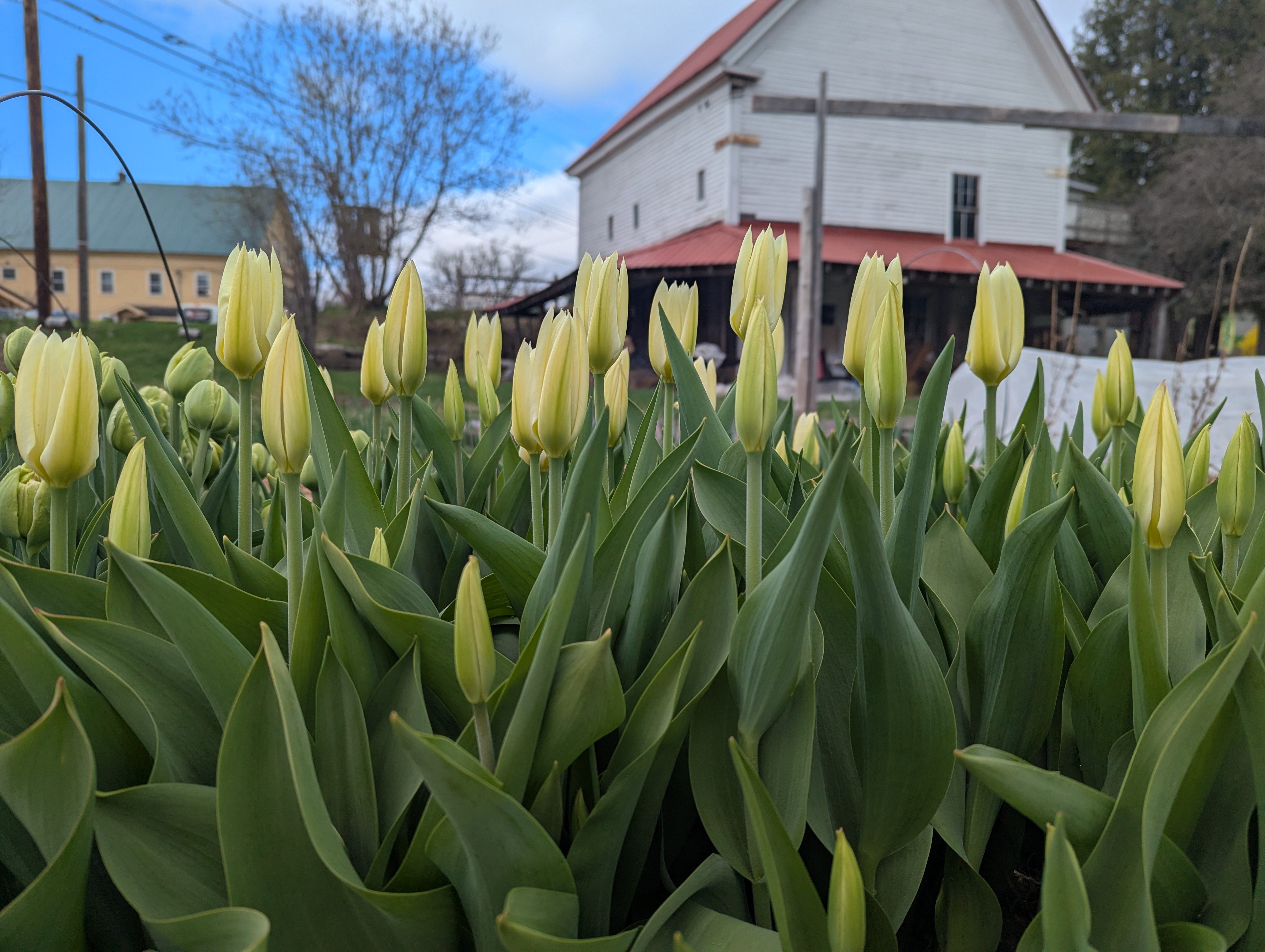
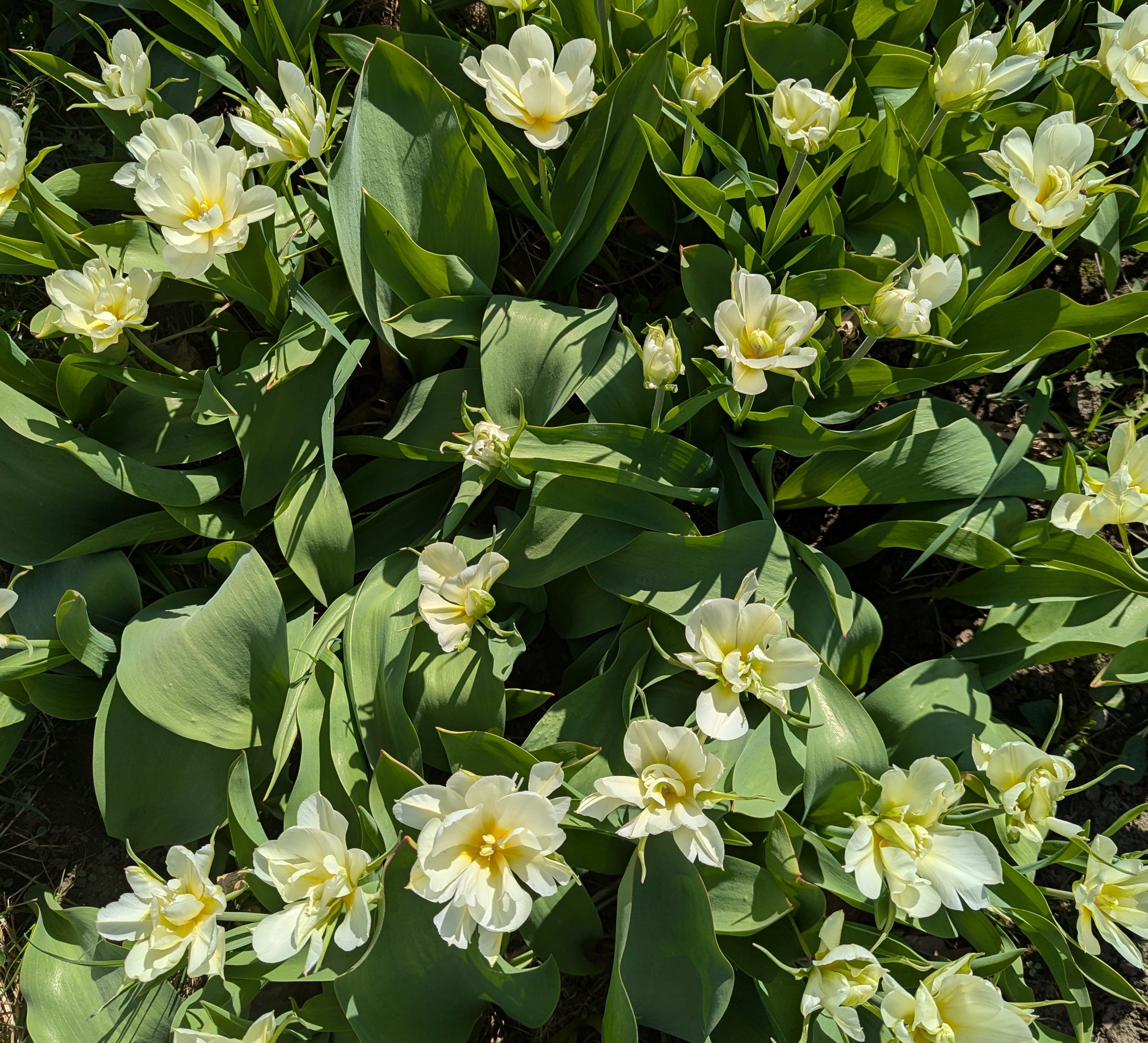
Petal varieties - When we picture a tulip we often think of single petaled tulips, those egg shaped blooms in with one row of petals, often in one color. Petals can vary wildly from one tulip to the next - Lily-Flowering, Doubles, Fringe, Parrot… there are lots to choose from. I love the Floret Library (see resources below), because there are comprehensive growing guides and great pictures of each variety.
Colors - There are so many tulip colors to choose from, including striped or “broken” varieties. Plant several varieties in a monochromatic palette or make your garden a riot of color, the choice is yours!
Planting Tulips
There are lots of ways to grow tulips, but in this post I will focus on growing tulips in the garden bed or landscape, and growing for cut flower production.
Tulips in the Garden Bed are planted with the intention of leaving the bulbs in the ground so they can perennialize. Much like growing other perennials, the bulbs are planted with plenty of space so eventually tulips will naturalize in the landscape, producing more and more blooms each season. There are varieties that are better suited to landscaping, like the Darwin Hybrid Series, Emperor, Fosteriana, and Species Tulips.
Growing in the garden bed - dig 8-12” holes for each bulb spaced about 6” apart, after the first frost but before the ground freezes. Plant tulip bulbs, pointy side up. If using, sprinkle red pepper flakes in each hole to prevent mole and mouse damage, and cover withthe loose soil dug from each hole. Water deeply.
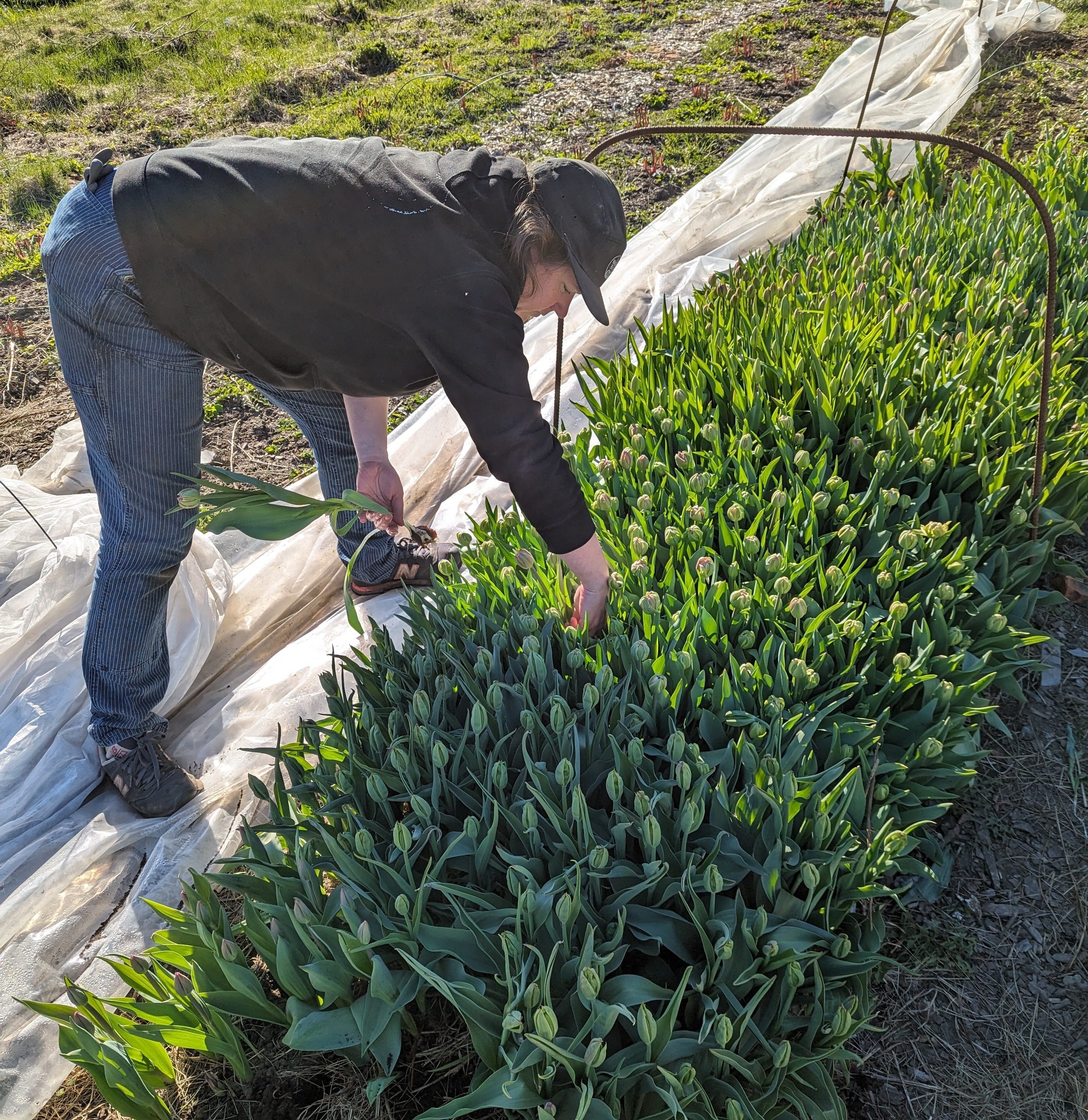
Tulips for Cut Flower Production are treated like annuals, with new bulbs purchased each fall. When planting for cut flower production, tulip bulbs are spaced close together without bulbs touching, much like eggs in a carton. During harvest the entire flower and bulb will be removed from the soil in order to get maximum stem length. Planting cut flower tulips tightly yields more blooms per square foot, making harvest and plant care more efficient. In the past I’ve been able to squeeze nearly 2000 bulbs into two 3’x30’ beds. I love testing out interesting tulip varieties for cut flowers, like varieties with double pettles, fringed edges, or the vibrant colors of parrot tulips. I like to have tulips blooming throughout Spring, so I choose varieties with different bloom times and I use row covers to stretch the season. By using low tunnels on my earliest varieties I’m able to force blooms a bit earlier than if they were left uncovered in the field.
Growing for Cut Flower Production - Dig up garden beds creating an 8” deep trench where tulips will be planted. Plant bulbs tight together but not touching, almost like eggs in a carton - you should be able to plant about 10 bulbs per square foot. Cover with soil dug from the beds and water deeply. Mulch with shredded leaves or straw after the ground freezes. Remove mulch in the spring when the snow has melted.
A Note on Disease and Crop Rotation - Tulips are susceptible to “Tulip Fire” or Botrytis tulipae, a fungal disease causing brown spots, twisted leaves, and deformed blooms. “Tulip Fire” can quickly wipe out a whole crop and remain in the soil for years, so it’s best to remove infected plants as soon as possible. Best practice is to plant tulips in beds once every seven years, rotating the crop to reduce risk of botrytis. When planting, pay close attention to bulbs, they should be firm with no mold or ‘punky’ soft spots. In the Spring, any plants that we suspect of Tulip Fire are immediately pulled and disposed of in the trash - composting diseased bulbs will spread botrytis to other plants. See our resource section for more infromation - Johnny’s has good information on Tulip disease prevention.
Extended Reading
Floret Library - Information on varieties I love like - Avant Garde, Columbus, Crunchy Cummins, Estelle Rijnveld, Exotic Emperor and more.
Johnny’s Growers Library - Johnny’s has an extensive growers library that I have used countless times. Their information about tulips has been really helpful as I play around with indoor bulb forcing, timing, and season extension.
Your Local Library - There are lots of great gardening books at your local library! Plus, if you can’t find the book you’re looking for you can ask about an interlibrary loan, maybe a neighboring library has a copy you can borrow! Ask your local librarian, they are ready to help you find what you need.
Tulips by Stanley Killingback - I got this at a local thrift store, and if you want to geek out about tulip growing and can get your hands on a copy I would recommend this book. It’s a deep dive and best suited to an intermediate gardener.
Growing Bulbs: The complete practical Guide by Brian Matthew - This one has lots of practical information and more general bulb info about lots of different bulb varieties. The tulip section is quite helpful and it has info on other bulbs like hyacinth, amaryllis, crocuses and more. A good growers guide to a wide variety of bulbs.
Beautiful Madness by James Dodson - This memoir covers a lot of ground, from growing tulips for competition at the Philedelphia Flower Show, sourcing exotic plants, and chatting with expert gardeners across the globe. Part travel memoir, part garden geek book, Beautiful Madness has mixed reviews - the author is best known for his books on golf - but I found it to be a quick read that had me doing a deep dive into the world of competitive tulip growing and flower shows.